

11 Plus Tutors, Apps and Self Study: Costs and How to Choose
Compare current published examples for tutors, apps and free familiarisation materials, then work out which kind of support fits your child and budget.
 Elspeth Marlow
- 9 min read
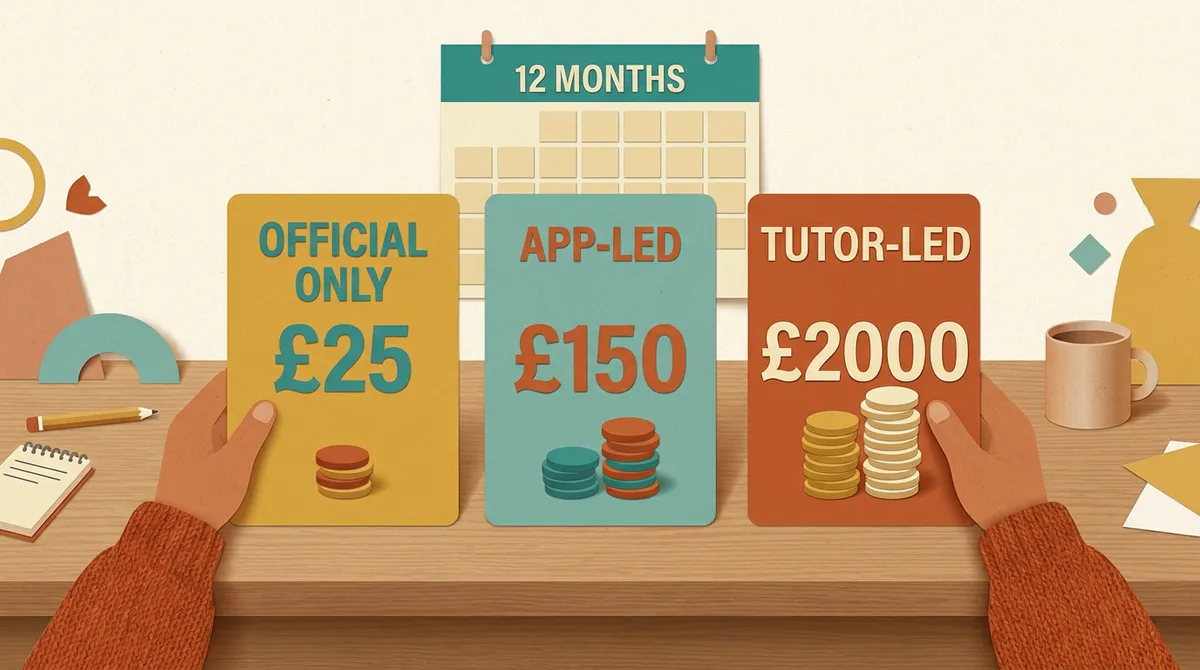
Families prepare for the 11+ in different ways: with free familiarisation papers, an app, a tutor, or a mix. The right choice depends on the local test, what the child finds difficult, how they prefer to practise and what the family can spend. No single route guarantees an outcome.
The provider prices below were checked on 24 October 2026. They are published examples, not a survey of the tutoring market. Prices, availability and membership terms can change, so check the provider's current page and written quote before committing. For the test itself, use the current information from the relevant council or school.
Myth: everyone charges roughly the same
Tutor marketplaces show individual prices, not a representative average. On 24 October 2026, MyTutor's 11+ page advertised tutors from £26 per hour, while Tutor Hunt's 11+ page advertised lessons from £15 per hour. Those are advertised starting prices. They do not tell you what a suitable tutor for your area will quote or what most families pay. Tutor Hunt also states on its own page that its tutors are Enhanced DBS checked and ID verified. Check what checks the specific platform or tutor has completed, and ask for current safeguarding details.
Compare like with like. Ask whether a quote includes planning, marking, materials, travel or a platform fee; how long each session lasts; and whether cancellation or minimum-term rules apply. A listing price alone says little about a tutor's fit or teaching quality. The Sutton Trust's 2026 study concerns private tutoring among secondary pupils in England and Wales, not 11+ tutor prices, so it cannot show whether an 11+ tutor costs more in one region than another.
Myth: apps are always the cheap option
Atom Learning lists three plans. Its English, Maths and Science plan is £39.99 monthly or £383.90 for a year paid up front, but it does not include verbal or non-verbal reasoning. Exam Prep covers those reasoning subjects and is listed at £59.99 monthly or £575.90 yearly. Exam Prep Plus is listed at £69.99 monthly or £671.90 yearly and adds unlimited mock tests. These prices and included features are those shown on the provider's page at the review date; check the plan details before buying.
Explore Learning lists entrance-exam group membership from £190 per month for two sessions a week, and one-to-one tuition from £180 per month for one weekly session. It says its programme includes independent practice and three full-length mock exams. The actual plan and price depend on format and membership options, so ask for the terms for your child.
These examples show why labels such as “app” and “tutor” are not cost categories. Compare the plan's included subjects, contact time, materials, mocks, feedback and cancellation terms against the local test.
Free familiarisation materials
GL Assessment publishes ten hours of free familiarisation materials as downloadable PDFs, with examples across verbal reasoning, non-verbal reasoning, English and maths. GL says the samples are intended to familiarise children with multiple-choice layout and examples of question types, and warns that local timings and question numbers may differ. Its paid practice papers are separate printed booklets. GL also says tutors and other organisations must not republish or distribute its materials without permission.
Some councils fund extra support for eligible pupils. Warwickshire County Council currently describes free Atom Home access for eligible Years 3 to 6 pupils, including children who have been eligible for free school meals at any point in the last six years. Eligibility is verified through the child's primary school. This is a local scheme, not a benefit available in every area.
Check your own council's test page before choosing materials. Redbridge links to GL's samples and warns that their number, type or difficulty may not match the local test. Our guide to free 11 plus practice papers explains ways to use sample papers while keeping that limitation in mind.
Compare costs for the plan you are considering
A twelve-month total depends on how often the child attends, whether the provider requires a minimum term, and what the fee includes. Here are transparent calculations using published prices checked on 24 October 2026. They are examples, not recommended study schedules.
- Free familiarisation: GL's sample PDFs are free. Printing, travel and any extra practice you choose to buy are additional costs.
- App plan: Atom Exam Prep was listed at £575.90 for a year paid up front. This covers verbal and non-verbal reasoning as well as English, maths and science; mock tests are not included. Exam Prep Plus was listed at £671.90 yearly and includes unlimited mock tests. Prices checked on 24 October 2026.
- Tutor quote: multiply the tutor's hourly fee by the number and length of booked sessions, then add any separate travel, materials or platform costs. At an example quote of £45 for a 60-minute session, ten sessions would cost £450. The £45 figure is an illustration, not a market average.
- Centre membership: Explore Learning listed entrance-exam group membership from £190 a month and one-to-one from £180 a month. Twelve payments at those displayed starting prices would be £2,280 or £2,160 respectively, before any terms or changes shown in the provider's agreement.
Ask what the child will practise, who will review errors and when you will decide whether to continue. Those answers help you compare what each plan includes without assuming that a higher price means a better fit.
To estimate a tutor quote, enter the hourly or per-session rate, session length, frequency, teaching weeks and any extra costs below. The widget works out the session count and total. It starts at about 38 teaching weeks, its estimate of a school year; change that figure to match the quote. It is not a recommendation about how often to book lessons.
This part of the guide works out what a year of tuition costs from a quote. It works in your browser.
Matching support to the child
- Already secure across the subjects in the local test, and works independently. Start with the official familiarisation material and check which other resources, if any, are needed.
- One specific gap, secure elsewhere. Consider a short block of focused tutoring or targeted app practice, and agree how you will review progress before booking more.
- Low confidence or needs help getting started. A tutor may provide live explanation and structure. A trial lesson can help you judge whether the child responds well to that format.
- Has not seen non-verbal reasoning before. GL's free familiarisation materials include NVR examples. Our walkthrough of non-verbal reasoning question types introduces common practice formats, but check the local test information too.
- Needs help keeping a routine. Consider which format is easiest for your family to use consistently, and whether the provider's schedule and price are manageable.
Questions that can help you choose
A tutor can explain a method in conversation and adapt to a child's responses. An app can offer repeatable practice and, depending on its features, immediate feedback. Printed materials can help a child become familiar with paper-based instructions. Their suitability depends on the learner, the product and the local test.
Before paying, try a short sample from the official familiarisation material where available. Look at the child's working and ask what they found difficult. A full-length mock may be tiring and may not match the local test, so check the admission authority's guidance before using one as a baseline. GL says its practice tests can help identify strengths and weaknesses, but its timings and question numbers may differ from local tests.
Test arrangements differ between areas. Buckinghamshire's familiarisation booklet describes two multiple-choice tests, one for English and verbal reasoning and one for maths and non-verbal reasoning, with shorter optional practice tests. Bexley's 2026 test information for September 2027 entry describes two timed multiple-choice booklets taken in one session, each about 50 minutes plus instructions, with a short break between. Redbridge's 2026 test information for September 2027 entry describes one paper combining English and verbal reasoning and another combining maths and non-verbal reasoning, and links to GL samples while warning that these might differ from the local test. Both 2026 sittings for 2027 entry have taken place. These examples show differences between named areas, not a template for the next cohort; check its latest council and school guidance before planning.
If you are deciding when to begin, our year-by-year 11 plus preparation plan is a general planning aid; adapt it to the dates and subjects published for your target schools.
Questions to ask before you pay an 11 plus tutor
- What is your hourly rate, and does it include planning, marking and materials?
- Have you prepared children for my target school's test, and what does that test involve?
- What practice will you set between lessons, and who reviews it?
- How will we review whether this arrangement is useful, and when might we stop?
- What is your notice period, and can we start with a fixed block?
- What safeguarding checks have been completed, and can you explain how sessions are supervised?
A practical starting point
Start by checking the current information from your target school or admissions authority. Use the official familiarisation material if one is available, then decide what the child needs next: more practice, help understanding a method, feedback or support keeping a routine.
If you would like structured practice, marking and a plan, you can see what is included on our pricing page and compare it with the other options above.
Comparing a tutor-led service with home learning
If you are weighing a tuition centre against independent practice, our Explore Learning comparison keeps human teaching time separate from software access. For a platform shortlist, compare Atom Learning and Planet BOFA, then try the same unfamiliar idea and explanation in each product.
Topics
- 11 plus tutor
- costs
- self study
- apps
- parents