
Verbal Reasoning: All the Question Types and How to Solve Them
The 21 verbal reasoning question types every 11+ family is told to learn, sourced against what the exam boards actually publish, with an original worked example for each and per-type time budgets taken from a real 25-minute paper.
 Elspeth Marlow
- 13 min read
In the UK, "verbal reasoning" names two completely unrelated tests: the graduate and employment aptitude test where you read a business passage and answer true, false or cannot say, and the 11+ reasoning paper sat by ten and eleven year olds applying to grammar and selective independent schools. If you are preparing for a job assessment, this page is not for you. Everything below is about the 11+.
Search for the 11+ version and you will be told, flatly and everywhere, that there are 21 question types. Some sites say 18. One says 23. None of them cites a source, and there is a reason for that: no exam board publishes a closed list. "21 types" is a tutoring-publisher convention that hardened into folklore because it was repeated often enough.
This guide does something different. It teaches all 21 formats, because that is what families came for and because they genuinely do recur across GL-style papers. But it marks which ones appear in official published materials and which ones come from commercial practice books, gives every type an original worked example reasoned through to its answer, and then converts the list into something a list cannot do on its own: a timed, 20-minute diagnostic that tells you which of three skills to actually fix.
Myth one: the 21 types are an official specification
They are not. The most instructive document a parent can read is the official familiarisation booklet published by GL Assessment for the Medway Test, because it is written by the organisation that authors the verbal reasoning content itself.
That booklet illustrates exactly four verbal reasoning formats. Four. And it states in print that the types of question used in the booklet may not be included in the real tests, and that there will be some additional types of question in the real tests that are not shown.
GL is equally direct elsewhere. On its free materials page it states that the exact timings for, and the number of questions in, your local 11+ test may differ from those in its familiarisation and practice materials. There is no single national paper, so there can be no single national type list. Formats vary by region and by consortium, and a Kent, Medway, Buckinghamshire or independent-school paper may not look alike.
The four formats actually illustrated in that official booklet are: a four-letter word hidden across the boundary of two adjacent words; the two words most opposite in meaning from two bracketed groups; three consecutive letters removed from a word in capitals; and the two words that do not belong with three related words. Everything else in the famous list of 21 is a reasonable inference by publishers from papers they have seen. That is useful. It is not scripture, and you should not treat any type as guaranteed to appear or guaranteed to be absent.
Official wording on what the section tests: "Questions in the Verbal Reasoning section will test how well you can apply rules and work out relationships between words and letters."
Read that sentence again, because it is the whole subject in one line. Rules and relationships. Not 21 tricks.
Myth two: preparation means marching through 21 types
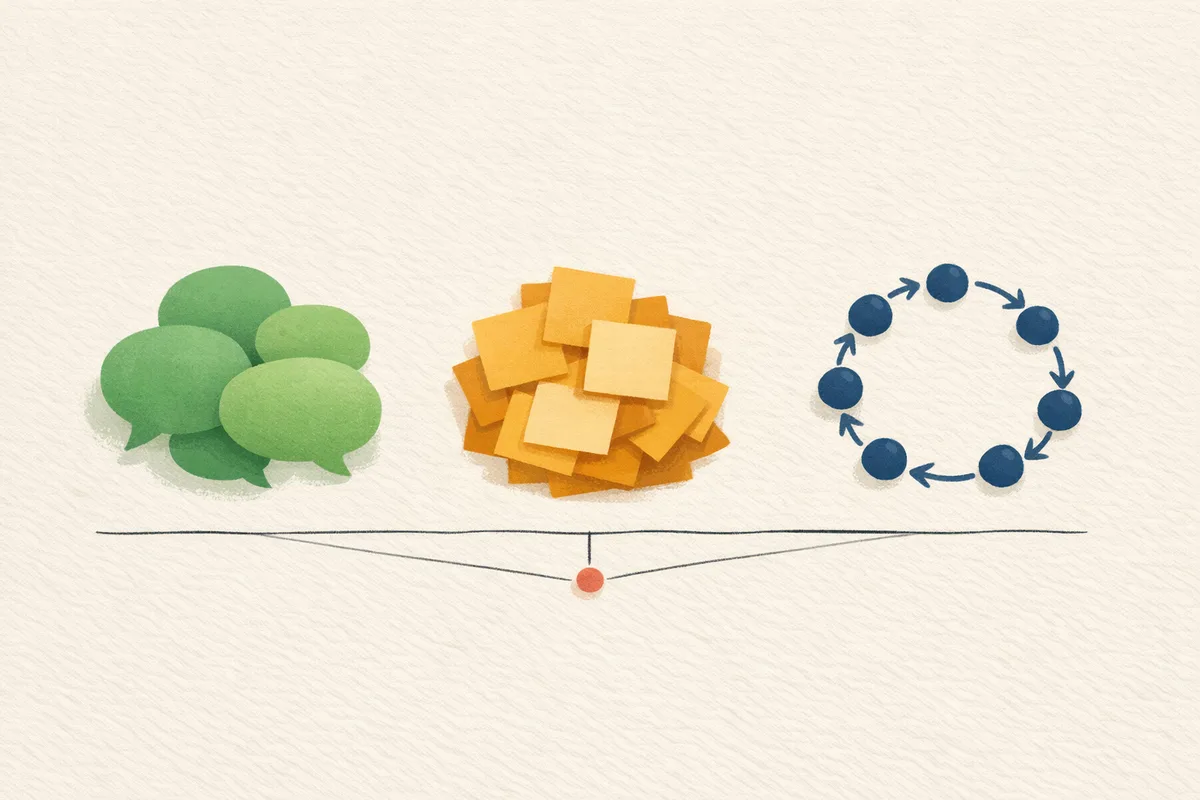
The 21 formats collapse into three underlying skills. A child who fails hidden words usually fails missing letters too, because both need the same visual scanning. A child who fails letter codes usually fails letter series, because both need alphabet fluency. Diagnose to the family, then drill the family. Marching type by type through 21 worksheets treats 21 symptoms of three causes.
Here is the same timing point made concretely. In the Medway Test, the Reasoning paper covers spatial, non-verbal and verbal reasoning across 45 timed minutes, of which verbal reasoning is exactly 25 minutes, delivered as one single timed section preceded by two practice questions allowed two minutes. That single block is the number to plan around, and the arithmetic no competitor does: if your local paper puts 40 questions in a 25-minute section, that is roughly 37 seconds each; at 50 questions it is 30 seconds. Check your own area's question count before you fix a target, because GL says explicitly that counts differ.
Family one: word meaning (seven types)
This family is powered by vocabulary breadth. No technique substitutes for knowing the words.
- Closest meaning. (Practice-book convention.) Find the two words, one from each group, nearest in meaning: (brisk, damp, sturdy) (fragile, robust, hollow). Sturdy and robust both describe something strongly built, so that is the pair.
- Opposite meaning. (Confirmed in official materials.) Same shape, reversed: (scarce, gentle, sudden) (plentiful, sharp, brief). Scarce and plentiful are direct opposites.
- Odd two out. (Confirmed in official materials.) Find the two that do not belong: harp, violin, trumpet, cello, flute. Harp, violin and cello are stringed; trumpet and flute are blown.
- Word connections. (Practice-book convention.) Bird is to nest as bee is to which of hive, honey, sting? The relationship is "lives in", so hive.
- Complete the sentence. (Practice-book convention.) "The path was so ______ that we had to walk in single file." Choose from wide, narrow, steep. Single file is forced by width, so narrow.
- Double meanings. (Practice-book convention.) Find one word that fits both groups: (case, box, chest) (torso, tree, luggage). Trunk works in every sense of both.
- Word groups. (Practice-book convention.) Which word from the second group belongs with the first? First: oak, willow, birch. Second: petal, sycamore, meadow. Only sycamore is a tree.
Family two: letters and word building (seven types)
This family is powered by visual scanning and confident spelling. Vocabulary helps, but the real skill is seeing letter strings inside other letter strings.
- Hidden word. (Confirmed in official materials.) Find the four-letter word hidden across a word boundary: "Please give her one more chance." The join of "her" and "one" gives HERO.
- Three-letter word inserted. (Practice-book convention.) "The farmer had to B____D his cattle before winter." The missing three letters must themselves make a word: RAN, giving BRAND.
- Missing letters removed. (Confirmed in official materials.) Three consecutive letters have been taken from a capitalised word and form a word of their own: S _ _ _ R with PEA gives SPEAR.
- Insert a letter. (Practice-book convention.) One letter ends the first word and starts the second in both pairs: hear (?) ent and boas (?) rain. T gives heart, tent, boast, train.
- Move a letter. (Practice-book convention.) Move one letter from the first word to the second so both remain real words: SPARK and TAR. Moving the S gives PARK and STAR.
- Compound words. (Practice-book convention.) One word from each group joins to make a new word: (car, rain, sun) (bow, book, desk). Only rain and bow combine, giving RAINBOW.
- Complete the word. (Practice-book convention.) The bracketed word takes the last two letters of the first word and the first two of the second: BRUSH [SHOP] OPEN. Apply it to FRESH [?] OWNER and you get SHOW.
Family three: codes, sequences and logic (seven types)
This family is powered by rule extraction, and it is the family where marks are most often lost to panic rather than ignorance.
- Letter codes. (Practice-book convention.) If TIDE is coded UJEF, every letter has moved on one place, so CAT becomes DBU.
- Letter series. (Practice-book convention.) AC, EG, IK, ?, QS. Each pair jumps four places, so the missing pair is MO.
- Word codes. (Practice-book convention.) If TRAIN is coded 51324, then T is 5, I is 2 and N is 4, so TIN is 524.
- Number connections. (Practice-book convention.) 2 [10] 5 and 3 [21] 7. The bracket is the product of the outer numbers, so 4 [?] 6 gives 24.
- Number series. (Practice-book convention.) 4, 7, 13, 25, ?. The gaps double: 3, 6, 12, then 24, so the answer is 49.
- Letters for numbers. (Practice-book convention.) If A is 2, B is 3, C is 4, D is 12 and E is 6, then D divided by B, plus A, gives 4 plus 2, which is 6, which is E.
- Reading information. (Practice-book convention.) Tom is taller than Priya. Priya is taller than Sam. Sam is taller than Ben. Who is second shortest? Order them, and Sam is second from the bottom.
If that last family feels like the non-verbal paper in disguise, it is: the same rule-extraction habit drives both, which is why our guide to non-verbal reasoning question types uses the same diagnostic structure.
The alphabet-position method
Almost every question in family three, and several in family two, becomes easier the moment a child stops counting from A. The method is simple and it is worth ten minutes a day for a fortnight.
At the start of the section, write the alphabet along the top of the rough-work space in the question booklet with position numbers beneath it, then never count from A again. Underneath that, learn five anchors by heart: A is 1, E is 5, J is 10, M is 13, S is 19 and Z is 26. From an anchor you count two or three places, not nineteen. For reverse codes, the pairing to memorise is that any letter and its mirror add to 27, so A pairs with Z, B with Y, and M with N.
The booklet permits rough work in the question booklet and provides no extra paper, so the alphabet strip has to live there. Practise writing it in under twenty seconds, because that time comes out of the 25 minutes.
Myth three: your child can pace themselves by the clock
They cannot, and this is the detail almost no 11+ page mentions. Children are not allowed to take any timer, calculator or smart technology into the test room, and that explicitly includes watches, phones and trackers such as a Fitbit or Garmin. A child sitting the verbal reasoning section has no personal way to check how much of the 25 minutes has gone.
That reframes per-type time budgets entirely. They are not a nice-to-have coaching flourish. They are the only pacing mechanism the child is permitted, because the pace has to be internalised at home and then run from memory. Train these targets on a kitchen timer:
- Fast recognition types, 20 to 30 seconds. Hidden words, odd two out, opposites, closest meaning, compound words, word groups. These are recall, not construction. Anything slower means the vocabulary is not there yet, and the fix is words, not technique.
- Middle types, 35 to 45 seconds. Insert a letter, move a letter, complete the word, word connections, complete the sentence, double meanings, reading information.
- Slow construction types, 60 to 75 seconds. Letter codes, letter series, word codes, number series, number connections, letters for numbers. These need the alphabet strip and deserve the time banked by the fast types.
The banking is the point. Six fast questions answered in 25 seconds instead of 40 buys a minute and a half for the codes. And the skip rule is not ours, it is the exam board's, given directly to children in the booklet: you may not be able to finish all the questions, but try to do as many as you can, and if you cannot do a question, do not waste time on it but go on to the next.
The answer sheet rules that cost marks before a single question is answered
Answers go on a separate sheet that is scored by computer, and the mechanics are unforgiving. Mark answers with a pencil, drawing a clear horizontal line. Rub out mistakes completely, and never cross an answer out, because the computer cannot score a crossed-out answer. An answer sheet completed in pen will not be marked at all, and neither will one marked with a highlighter.
Rehearse this. A child who has only ever circled answers on a worksheet will circle them in the exam. Sitting full papers under real conditions is the only reliable way to make the sheet automatic, which is why timed mock tests matter more in the final term than another vocabulary list.
Diagnose your child in 20 minutes
Here is the step every competing page ends without. Take a set of practice questions, three from each of the 21 types, and sit them under timed conditions. GL publishes free familiarisation papers as downloadable PDFs across verbal reasoning, non-verbal reasoning, English and maths on its free materials page, and we have collected further free practice papers with answers elsewhere on this site.
Then build the scoring grid. Write three column headings on a sheet of paper: Word meaning, Letters and word building, Codes and logic. Put every wrong answer into the column of its family using the numbering above, types 1 to 7, 8 to 14 and 15 to 21. Count the marks lost per column, and read the result like this.
- Most losses in column one. The problem is vocabulary breadth. Technique will not touch it. Fifteen new words a week, used in sentences, plus reading above comfort level, is the whole prescription. Expect improvement in months, not days.
- Most losses in column two. The problem is scanning and spelling confidence. Drill short bursts: five hidden-word items a day, read aloud, letter by letter across the boundary. This family improves fastest of the three.
- Most losses in column three. The problem is rule extraction. Teach the alphabet strip first, then insist the child states the rule out loud before writing an answer. "Each letter moves on two" said aloud prevents most careless errors.
- Losses spread evenly across all three. The problem is not a skill, it is pace. Retest with a generous time limit. If the score jumps, you have a timing problem, and the per-type budgets above are the fix.
Retest the weakest family fortnightly and log the numbers, because a family that is not improving after three cycles usually needs a different explanation rather than more of the same worksheets. Trace Learn's progress tracking does this scoring automatically, though a sheet of paper and ten minutes does the same job.
One closing caution, and it follows from the myth we opened with. Because no board publishes a closed list, your child will meet a format on the day that nobody drilled. That is not a failure of preparation; the exam board says in print that it will happen. A child who has learned three families and a rule-stating habit can attempt an unfamiliar question. A child who learned 21 named tricks cannot. Prepare for the skill, and the formats look after themselves.
Topics
- verbal reasoning
- 11 plus
- question types
- gl assessment
- exam technique