


Practice Papers and Mock Tests
11 Plus Past Papers: Where to Find Genuine School and Board Papers
Many resources sold as 11 plus past papers are practice papers. Find official sample materials and published papers, and check how well an older paper matches the current test.
 Elspeth Marlow
- 12 min read

You searched for 11 plus past papers. What came back was a page of downloads, packs and bundles, almost all of them labelled with the phrase you typed. It looks like a solved problem. Somewhere in those results, you assume, is the actual paper your child's target school actually set, and all you have to do is find the free one.
Check whether a download is a past paper or a practice sample. GL Assessment's public free-materials page offers familiarisation PDFs and printed practice booklets; it does not list live 11+ papers. Cambridge Select Insight is a digital entrance assessment, and Cambridge says it does not provide commercial practice or past papers for it. Other organisations and schools publish different kinds of material, so check the source and the entry year before relying on a download.
Some schools and the CSSE consortium publish papers, while councils and test providers publish familiarisation materials. This article explains the differences and gives examples checked against the linked official pages. It is not an exhaustive directory of every school or provider.
What are you actually downloading when a site says past paper?
Four different objects circulate under the same label. They are not interchangeable, and the differences matter for how you use them.
- A genuine past paper. A paper that was actually sat by real candidates in a real sitting, released afterwards by the body that set it. It carries the true question count, the true timing, the true mark distribution and, if you are lucky, the official mark scheme. Check that the publisher identifies it as a paper from a previous sitting.
- A school specimen or sample paper. Published by a school to illustrate its assessment. It may contain new or previously used questions. Check the school’s description: a sample may show only part of the current paper, so do not assume its length, difficulty or timing reproduces the full test.
- An official familiarisation booklet. Published by an exam board or council to show the format, instructions or question styles. It is not a past paper, and it may not reproduce the full test or its difficulty.
- A commercial practice paper. Written by a publisher, tutoring company or education platform in the style of a real test. Quality varies enormously. The good ones are genuinely useful. None of them are past papers, however the download button is labelled.
A parent who knows which of the four they have in front of them will draw sensible conclusions from the score. A parent who thinks a publisher's practice paper is the real Kent Test will read far too much into a bad afternoon.
What does GL Assessment publish for 11+ preparation?
GL Assessment's public materials page does not explain whether or why live papers are withheld. It currently offers free familiarisation PDFs and paid printed practice booklets, and notes that test formats vary by area.
See GL Assessment's free materials page for the current resources. It lists familiarisation papers and practice booklets, not a live-paper archive. That supports a claim about the page, not a claim that no such paper exists anywhere.
Do not assume a paper advertised as a GL past paper is an official released paper. Check the publisher and the council's current test information. Provider arrangements can change: for example, Kent has announced Quest Assessments for its 2027 test (for September 2028 entry), so older GL materials may not describe that cycle.
What is the relationship between CEM materials and Cambridge Select Insight?
CEM, the Centre for Evaluation and Monitoring, was one provider in the 11+ landscape. Cambridge currently offers Cambridge Select Insight, a digital entrance assessment used by some selective schools, covering numerical, verbal and non-verbal ability. Check each school's current admissions information for its provider and test.
Cambridge describes Select Insight as computer-based and says results are available to download within 72 hours. It also says it does not provide commercially available practice or past papers. That is the relevant limit: do not treat third-party material as an official paper.
If you find a PDF advertised as a CEM past paper, check its source, date and whether it is an official released paper or a practice reconstruction. If you are unsure which test your child's school uses, our comparison of GL, CEM and ISEB routes sets out what to check.
The ISEB Common Pre-Tests cover English, mathematics, verbal reasoning and non-verbal reasoning and are digital. ISEB offers familiarisation resources and a test walkthrough, but no traditional Pre-Test past papers. Its Common Entrance papers are separate assessments and should not be confused with Pre-Test papers.
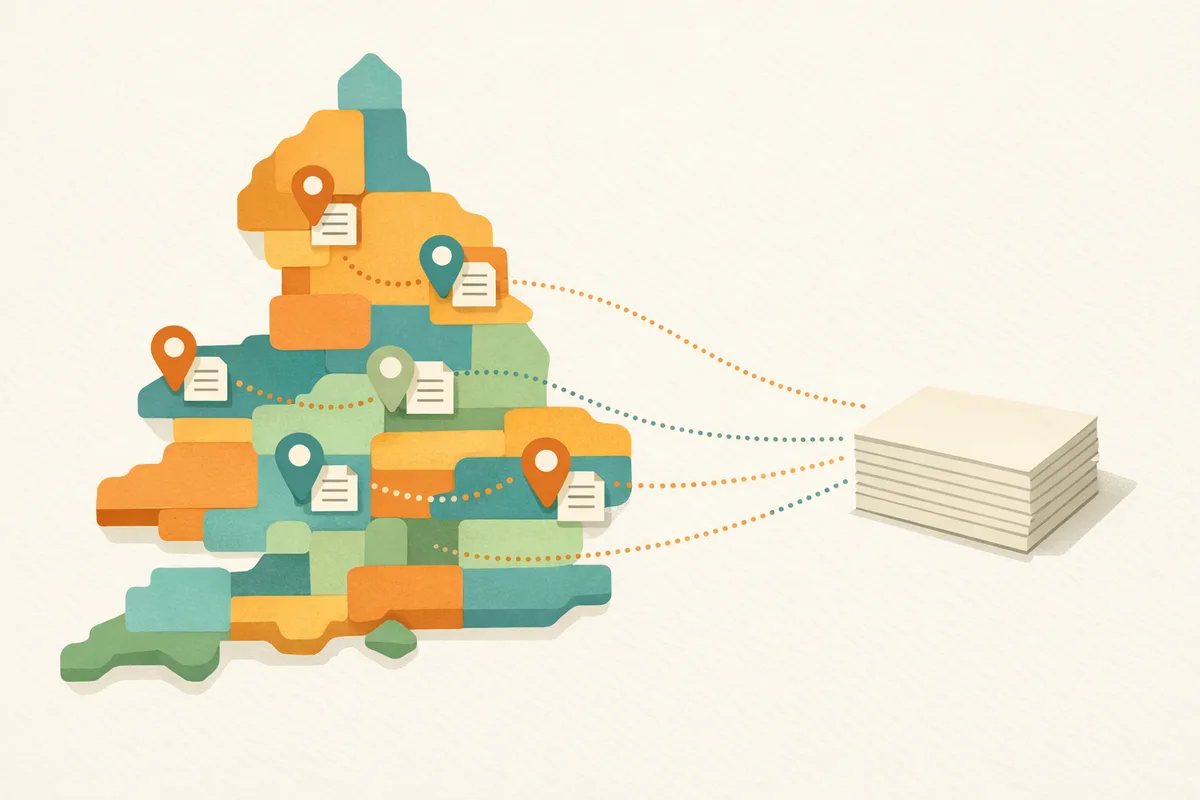
Which state grammar schools and consortia publish genuine past papers?
These examples illustrate the difference between released papers and familiarisation resources. Check the current official page before using them.
CSSE, Essex. The Consortium of Selective Schools in Essex is the outstanding case in England. It publishes genuine past papers on its practice material page for 2021, 2022 and 2023 entry. Each year set includes an English Paper, an English Continuous Writing Paper, an English Mark Scheme, a Maths Paper and a Maths Mark Scheme. These are category one: real papers from live sittings, with the official marking. The consortium notes that all CSSE examination papers are protected by copyright, so use them at home rather than redistributing them.
Kent County Council. Kent publishes a Kent Test familiarisation booklet and preparation guidance. These are for understanding the format, not released past papers. Kent has announced a new provider for its 2027 test, so check the current cycle's page before using older materials.
Buckinghamshire Council. Buckinghamshire publishes a familiarisation booklet for the Secondary Transfer Test. Its current guidance says there are two papers of about 60 minutes each, with a break between them, and describes a shorter practice test usually held two days before the main test. These materials help explain the format; they are not released past papers.
For other areas, consult the current council or consortium admissions page. I have not verified every authority's publication policy, so this article does not claim that none publish past papers. Our regional guide to grammar schools and their entrance tests is a starting point.
Which independent schools publish past or specimen papers?
Some independent schools publish their own sample papers. Others use shared assessments or several stages. Check which stage each published paper illustrates and whether the school calls it a specimen or a released past paper.
St Paul's Girls' School publishes sample papers for three subjects on its 11+ entry page: English, with a sample paper and a reading passage; Mathematics, with two sample papers of which candidates sit only one; and General Comprehension, with a sample paper and a resource booklet. Written assessments for the current cycle fall on Saturday 5 December 2026, with no alternative dates offered.
Emanuel School. The school's May 2024 admissions policy said English and Mathematics specimen papers were available and listed those subjects plus verbal reasoning in the Year 6 and Year 7 entrance examination. Its published Mathematics specimen is 45 minutes. These documents do not confirm the current entry cycle's format or timings; I could not verify the previous claims about verbal-reasoning specimens or current English and verbal-reasoning timings, so those details are omitted.
City of London School for Girls publishes English and Mathematics specimen papers for its second assessment. For September 2027 entry, the school says the first assessment is a one-hour computer-based Cambridge Select Insight test in numerical, verbal and non-verbal skills; the second assessment includes 45-minute English and Mathematics papers. Interviews are scheduled for 11 to 21 January 2027. Check the school's page for the next entry cycle.
A school's materials may cover only part of its admissions assessment. Use its own specimen papers for the subjects shown and check its current instructions for any other stages.
Which schools explain what exam material they provide?
School websites may publish a syllabus or familiarisation link while withholding past papers. These examples describe what the schools say about their materials.
St Paul's School says it cannot send out past papers in English and Mathematics and provides an 11+ examination syllabus instead. Its published selection procedure describes an ISEB online pre-test, written English and Mathematics examinations for candidates who pass that stage, followed by an in-person interview for successful candidates. Check the page for the current cycle's dates.
The Henrietta Barnett School says it does not release past papers or offer resources for Round Two. For September 2027 entry, its current admissions page describes Round One in verbal reasoning, non-verbal reasoning and English, followed by a Round Two English and Mathematics test. The school links to GL Assessment familiarisation booklets for Round One; that link alone does not establish which organisation provides the school's test.
When a school does not publish past papers, use its current syllabus, subject list and any sample material to understand the published format. Do not treat familiarisation or a specimen as a released exam paper.
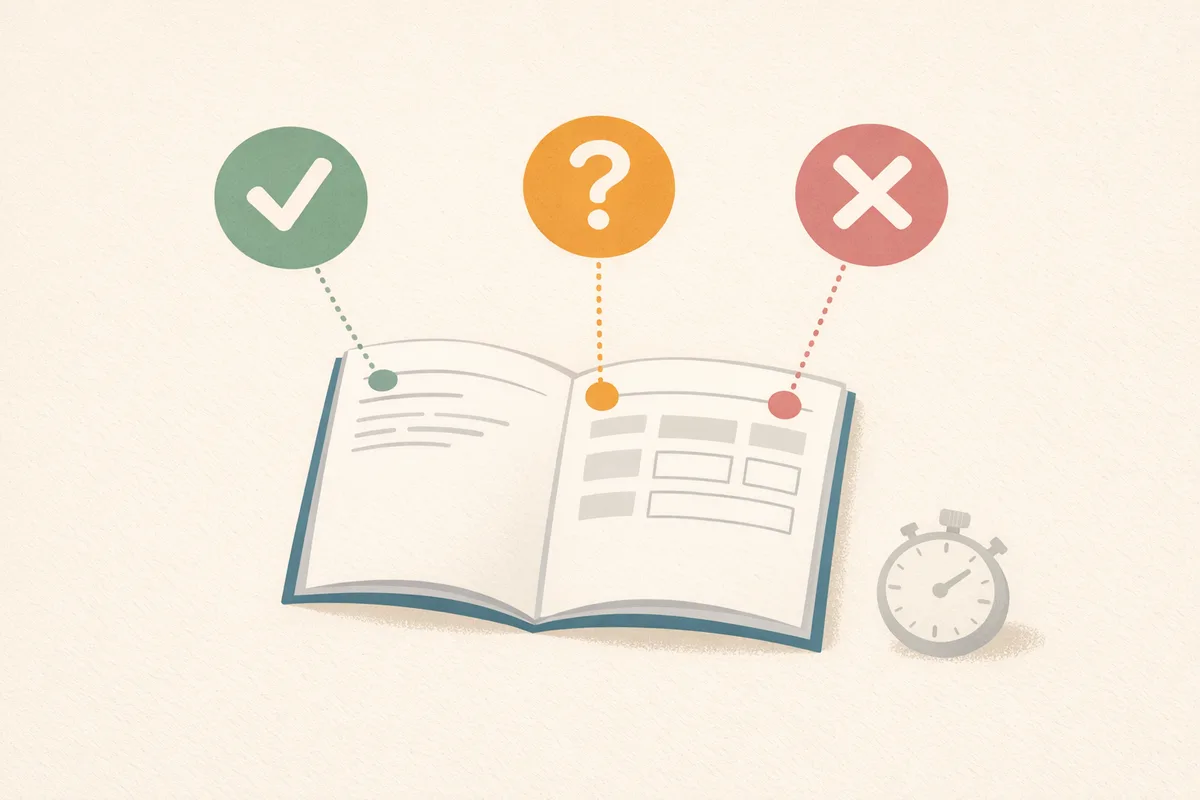
How do you use an old paper when the format has since changed?
An older paper needs to be read alongside the current test guidance. A CSSE paper for 2021 entry is a real paper, but it is several admissions cycles old. A specimen paper written before a school moved to Cambridge Select Insight describes a process that has partly moved to a screen. Both are still valuable. They are just not valuable in every dimension at once.
Split the paper into what has aged well and what has not.
- Question style: compare the older examples with the current official samples. Wording and answer methods may have changed.
- Difficulty: use the old paper to discuss methods, not to establish the difficulty of a future test.
- Topic coverage: check each topic against the current published content. Appearing in an old paper does not guarantee it will appear again.
- Timing and structure: use the instructions belonging to that paper. A shorter old sample cannot be made equivalent to a current full paper simply by giving it the current time limit.
- Scoring: keep the old paper's mark scheme with it. Its raw marks and historical boundaries cannot predict the next cohort's standardised result or offer cut-off.
For a first attempt, use the old paper untimed to explore methods if that helps your child. For timing rehearsal, choose material that matches the current format and follow its own section instructions. Record which paper you used so later practice results can be interpreted in context.
How do you choose and mark a practice paper honestly?
Start with official familiarisation or specimen material where it is available. If you choose a commercial practice paper, check its authorship, answers and fit with the current local test before relying on it.
Ask three questions of any pack. Who wrote it, and do they say so? The better providers are upfront: Owl Tutors states its free 11+ papers were written by its tutors, all of whom are qualified teachers, and designed around real formats, and Atom describes its papers as written by its own teachers and admissions specialists. Those are honest descriptions of reconstructions. Does it include a mark scheme? A mark scheme or explained answer key helps you check and discuss the working. And is it matched to your child's actual route, rather than to a generic 11+ that no single child ever sits?
Then mark it honestly. Two scores are worth recording, not one: the raw mark, and the count of questions left unattempted. Neither pattern diagnoses the cause by itself. Wrong or unattempted answers may involve unfamiliar content, reading, calculation, time pressure or another difficulty. Ask your child to explain their working before choosing what to practise. Our guide to free 11 plus practice papers with answers goes further into sourcing and marking, and our year-by-year preparation plan covers when in the cycle full papers start earning their place.
If you would rather not manage the marking yourself, Smart Cub Learning's paper-style tests provide practice with automatic marking and a per-topic breakdown. Check whether the product matches your child’s local test, and combine its results with their working before drawing conclusions about a difficulty.
To plan a practice sitting, enter the chosen paper’s length and number of questions below. The suggested checkpoints assume you can manage time across that section; they do not override fixed section timings or test instructions. The practice clock shows the next checkpoint as your child works.
This part of the guide works out seconds per question and checkpoints for a timed paper. It works in your browser.
How is this directory maintained?
The checked links live on one page: the 11+ past papers directory, which records for every paper the publisher, the kind of paper it is, whether answers exist and the date the link was last verified.
For a closer look at the questions in published papers, explore our 11+ past-paper trends. It groups the papers we have read by year and topic so you can identify useful practice, but some classifications await a second check and a past pattern cannot predict the content of your child's test. Check the current school's test specification before choosing topics.
School admissions pages move, and PDFs get pulled between cycles. This directory is reviewed each admissions cycle, and the categories above (genuine past paper, school specimen paper, official familiarisation booklet, commercial practice paper) are re-checked against each school's own live page rather than against what we published last year. Where a school has changed what it publishes, the entry changes with it, including the entries that say a school publishes nothing.
If a link here has broken or a school has started publishing material we have not listed, tell us through the contact route on this site and we will check the source page and update the entry. Corrections that remove a claim are as welcome as ones that add a school.
Choose a resource for a clear purpose: official guidance for the current format, worked questions for learning a method, or a suitable paper for rehearsal. Keep its publisher, date and answer key with it, and check your child's actual route before building a practice plan.
Topics
- past papers
- grammar schools
- gl assessment
- cem
- admissions
- free resources