


Boys, Writing and the 11 Plus: What the Evidence Does and Does Not Show
National data shows a group-level difference in writing attainment, not an explanation for an individual child. Check whether target schools assess composition and use low-pressure ways to notice what support may help.
 Elspeth Marlow
- 8 min read
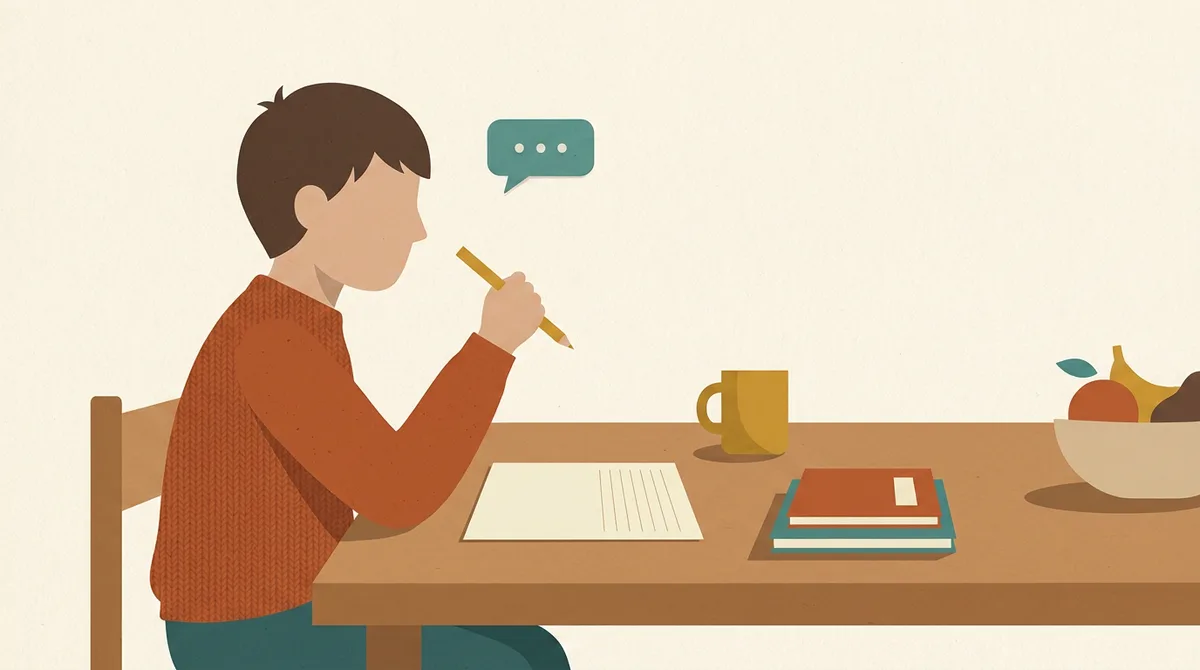
Some parents search for help when their child finds it hard to get ideas onto the page. A national difference in writing attainment between boys and girls can prompt that question, but it cannot explain an individual pupil's experience or predict how they will perform in a particular entrance assessment.
This guide looks at recent England attainment data, gives examples of how named admissions routes treat writing, and suggests ways to notice whether a child may need support with handwriting, spelling, sentence building or organising ideas. These observations are not a diagnosis. Gender does not determine a child's interests, writing skill or support needs.
What the national data actually shows
The latest Department for Education key stage 2 release covers England pupils assessed in summer 2026. In its provisional results, 73% met the expected standard in writing and 75% in reading. Girls continued to meet the expected standard more often than boys in every subject except maths. The largest sex difference remained in writing teacher assessment, at 11 percentage points. At greater depth in writing, 10% of boys and 16% of girls were assessed at that standard. These are group-level results, not evidence about why any individual child finds writing difficult (DfE key stage 2 attainment, 2025/26 provisional).
The National Literacy Trust's 2026 Annual Literacy Survey collected responses from 125,375 UK children and young people aged 5 to 18. Among those aged 8 to 18, 28.7% said they enjoyed writing in their free time and 11.9% wrote something daily. More girls than boys reported enjoying writing (34.9% compared with 21.1%) or writing daily (14.1% compared with 9.1%). These are survey responses about reported attitudes and habits, not evidence that gender causes writing differences (National Literacy Trust, 2026).
The overall enjoyment and daily-writing figures rose slightly from 2025, following a 15-year low. The Trust says writing engagement remains a concern. This is a wider issue, not a boys-only story.
What a group-level gap can and cannot tell you
The latest figures describe teacher assessments across England. They do not say what a particular child can do in a timed story, how a school assesses that child, or what is getting in the way. A difference in group averages is not a diagnosis, and it should not lower expectations for any pupil.
Writing includes transcription, such as spelling and handwriting, and composition, such as shaping ideas for a reader. A child may need practice or teaching in one part, several parts, or something else. Ask what the target school actually assesses before planning 11+ practice.
Use population data as context. Look at the individual child's work and the target assessment when deciding what to practise.
Check the target school's assessment
Selective-school assessments differ. These examples are for the September 2027 entry cycle unless stated otherwise; check the current admissions page for every school you are considering.
- Kent Test, September 2027 entry. Kent County Council says the test includes a 40-minute writing exercise, with 10 minutes for planning. It is not marked, but may be considered by a local headteacher panel in the headteacher assessment stage. For the September 2028 entry cycle, Kent has appointed Quest Assessments as provider; the Council says the test's purpose, format, timing and role in grammar school admissions will remain the same (Kent Test preparation, provider update).
- Buckinghamshire Secondary Transfer Test, September 2027 entry. Buckinghamshire Council describes two multiple-choice papers covering verbal skills, maths and non-verbal skills. It does not list a composition paper (Council test process).
- ISEB Common Pre-Tests. ISEB lists four assessments: English, mathematics, verbal reasoning and non-verbal reasoning. Each senior school decides how to use the results in its admissions process. Check the school's own requirements rather than assuming that this shared test is the whole process (ISEB test framework).
- A named independent-school example. For 2027 entry, Haberdashers' Boys' School lists a 20-minute creative-writing paper among its assessment components (Habs admissions process). This is that school's process, not a rule for boys' schools generally.
Notice which part of writing feels difficult
The national curriculum describes writing in two dimensions: transcription (spelling and handwriting) and composition (articulating and structuring ideas). It also says that spoken language supports reading and writing. The Department for Education's Writing Framework explains that writing uses working memory and that automatic handwriting and spelling can leave more capacity for composition (English programmes of study, Writing Framework summary).
You can observe a few things in a relaxed activity, without timing or scoring it:
- Ask the child to tell you what they might write about. Do they have an idea they want to explore?
- Invite them to write a short piece. Notice whether forming letters or spelling interrupts their flow, and whether they can organise the ideas for a reader.
- Ask what felt easy or difficult, and whether talking through an idea first helped.
This is not an assessment or a way to identify a diagnosis. If a difficulty persists or causes distress, discuss the child's work with their teacher and ask what support is appropriate.
Low-pressure ways to practise
Use activities that match the part of writing the child wants to work on. These are practice ideas, not guaranteed interventions.
- Handwriting and spelling: practise a small amount of writing, then review whether the writing feels comfortable and is readable. The national curriculum expects pupils in Years 5 and 6 to write legibly, fluently and with increasing speed, but it does not set a words-per-minute copying threshold for this activity.
- Planning and composition: talk through an idea, jot down a few key words, then write a paragraph for a reader. The curriculum explicitly includes planning, composing and rehearsing sentences orally.
- Sentence craft: read a short example together and notice how sentence length, detail or dialogue helps the reader. Try one feature in a new paragraph.
If handwriting or spelling remains difficult despite teaching and practice, ask the teacher to review the child's work and advise on next steps. Do not infer a learning difficulty from one short exercise.
Talk first, write second
The Writing Framework recommends oral composition while pupils develop transcription skills, and says it can remain useful later too. Invite the child to say an idea aloud before writing it, or to rehearse a sentence quietly. Talking can help some pupils organise an idea, but it is not a substitute for learning to write it down independently.
For example, the child might say: “The handle turned but the door did not move. Dust hung in the light from the window.” Then they can write those sentences and decide what happens next. Use the approach if it helps; pupils may have different ways of planning.
Feedback and a routine you can sustain
A routine can include short practice, reading and talking through ideas. Keep it manageable and adjust it to the child and the assessment they are preparing for.
For example:
- Short weekday sessions: an opening, a paragraph or a small amount of handwriting practice.
- One session to talk through and plan an idea before writing.
- An occasional longer piece, using the target school's instructions if a written task is assessed.
Feedback: choose one thing that worked and one manageable next step. Ask the child what they think before offering your view. If the teacher is supporting a particular skill, use the same focus at home.
Exam day, access arrangements and avoiding stereotypes
If the target school assesses writing, follow its instructions and familiarisation materials. In Kent’s 2027-entry test, the writing exercise allows 40 minutes including 10 minutes for planning; the exercise is not marked as part of the test score.
If your child needs an adjustment, check the current access-arrangements policy for the relevant test or school and speak with the school well before the assessment. Requirements and deadlines vary. See our guide to 11+ access arrangements for SEND.
Do not choose prompts or books on the assumption that boys all like the same things. Let the child choose subjects that interest them, and give them chances to write in different forms. A national average is not an individual limit; notice the child’s own strengths and ask for help when a particular part of writing remains difficult.
If you want structured practice around the rest of the paper while you work on writing at home, Smart Cub Learning covers the reasoning and English question types that most selective routes do mark.
Topics
- creative writing
- 11 plus english
- reluctant writers
- handwriting
- parents